
The Lathe Cut: Why Craftsmanship, Chaos, and an Old RCA 73B Are the Soul of Linear Labs
Linear Labs Newsletter, by Leo Moraes
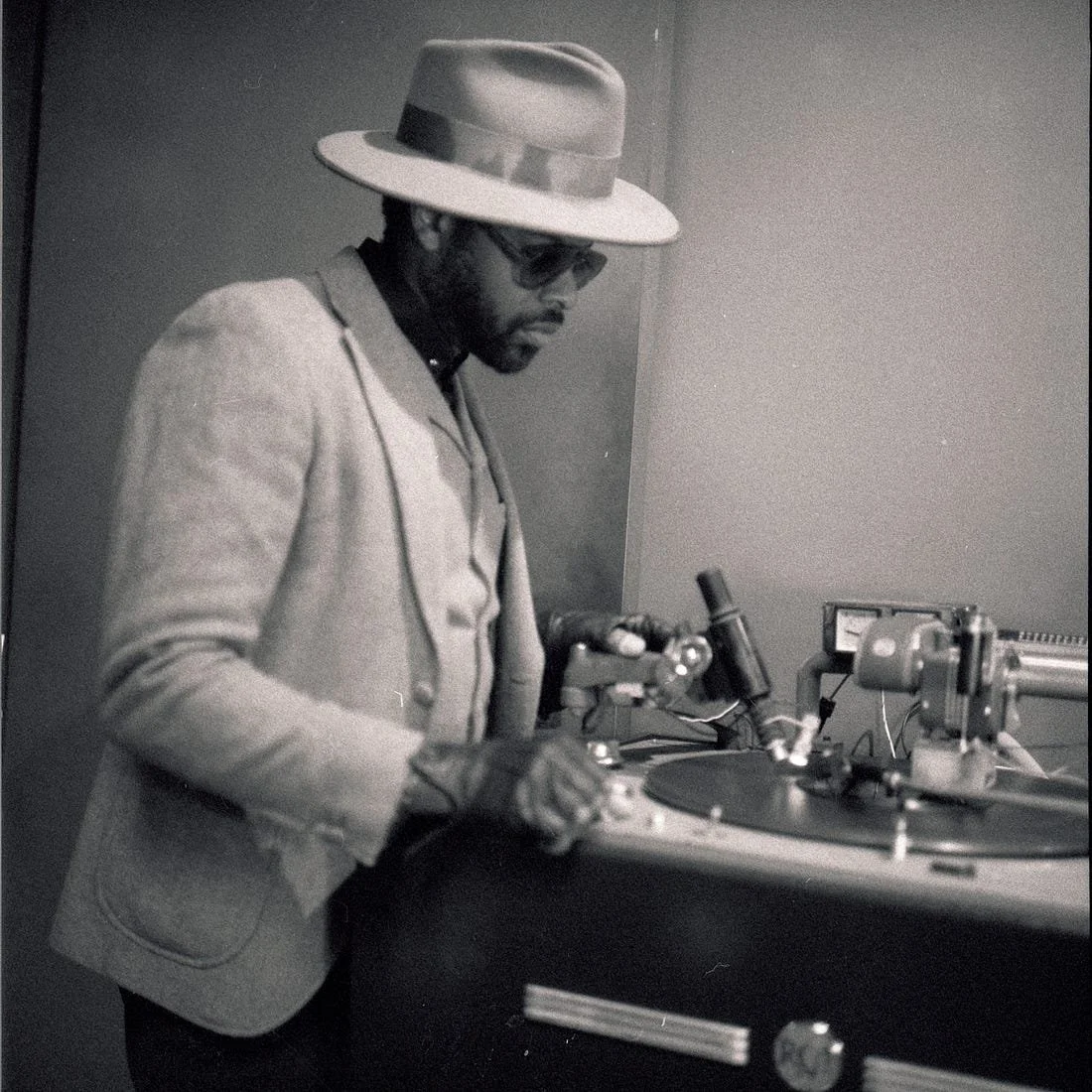
There is a quiet ritual that happens at Linear Labs when no one is watching. It involves a machine that looks less like a musical instrument and more like a piece of military surplus from a bygone war. It is an old RCA 73B, born in the 1940s, built when the world was still monochrome and analog was the only language. For the last couple of years, this machine has been here, but recently it has been used more and more frequently. And Adrian is its keeper.
For the better part of a decade, Linear Labs has been a studio obsessed with chain of custody. We could record. We could mix. We could master. But there was always a final step where the signal had to leave the building, leave the tape, leave our hands. The RCA 73B changed that. It was the last missing piece.
Now, the music can go from the musician’s fingers to the actual record without ever leaving these walls. From microphone to magnetic tape, from tape to the cutting head, from the cutting head to a vinyl blank. The circle is closed.
The Cost of One Good Cut
Let us be clear: this is not a scalable process. Adrian cuts each 45 one at a time. Not ten. Not a hundred. One. He monitors the depth, the heat, the distance between grooves. A single sneeze, a vibration from the street, a flicker in the power—any of these can ruin a cut. The waste bin is full of almost-perfect records that will never see a sleeve.
But that is precisely the point.
Each 45 that comes out of that RCA 73B is a unique object. It is not a file. It is not a stream. It is a physical artifact of a specific moment in time, cut by a specific human being who was thinking about the specific song. In an age of infinite copies, we have chosen to make things that are finite. Scarce. Even a little fragile.
To us, the symbolism of controlling the process from start to finish speaks to a deeper search. We are not just making music. We are valuing craftsmanship in the very act of making art.
The Boredom of the Bright Screen
We do not say this to be Luddites. We appreciate the digital revolution. Access is a gift. But let us be honest: there is something profoundly boring about the computer becoming everyone’s main tool.
It is not the technology itself. It is the sameness. When the machine we use to make our art is the same one we use to do our taxes, making art just isn’t quite as cool.
Have you ever stood in a darkroom? Red light glowing, the smell of stop bath in the air. You slip a blank sheet of paper into the developer, and for a moment, nothing happens. Then, slowly, like a ghost deciding to stay, the image appears. It rises out of the white. It is chemistry. It is physics. It is magic, but only because magic is just a word we use for things we haven’t reduced to algorithms yet.
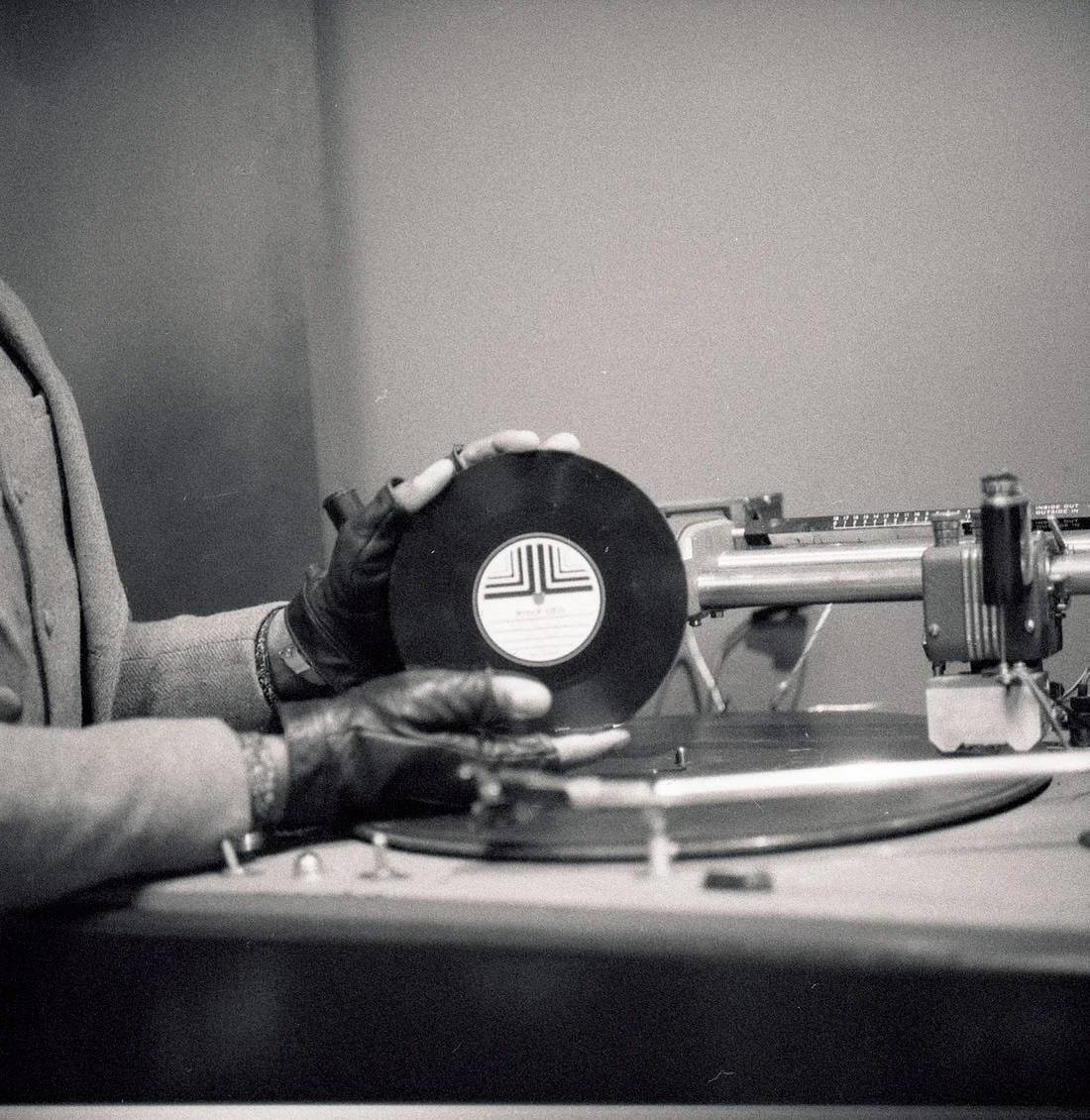
Cutting a lathe feels the same. You are not looking at a waveform on a screen. You are listening to the sound coming from the grooves as they are being carved into the vinyl. You hear the future. You hear the past. You hear the needle finding its way through a landscape that did not exist a second ago.
Tactile Faith
This obsession is not only about an aesthetic result. It is also about the feeling while producing the art. The weight of a tape reel in your hands. The careful threading of magnetic tape past the heads. The drop of the needle—that tiny, decisive fall.
These actions are inspiring. They are exciting. And they are true.
The Imaginary Audience
Adrian said recently in an interview: “There’s this imaginary audience in my head, and everything I do is to please them. And I tell you, these are some smart and beautiful people.”
Isn’t that what artists are supposed to do? Not to chase the crowd, but to create what pleases them, and hope that it will somehow resonate with others. Chaplin understood this: “The basic essential of a great actor is that he loves himself in acting... There must also be a fervent love of and belief in oneself.”
That is not ego. That is conviction.
The Future Is a Lathe
So we will keep doing what makes sense to us. We will believe that process matters. We will cherish the craft. And we will trust that there are others out there who understand and value it as much as we do.
Right now, only a handful of people can own the 45s cut by Adrian himself on the old RCA 73B. They are rare. They are expensive to make. They are not for everyone.
But who knows? If we keep believing in the magic of the physical, perhaps the near future holds a pressing plant of our own. Perhaps we will push this even further.
Until then, the machine is warm. The needle is sharp. And Adrian is listening to that imaginary audience of smart, beautiful people.
We hope you’re among them.
JOIN THE CONVERSATION.
